January Journal: Winter isn't Silent

January on the rewilding land moves a little slower. There is a quiet activity brewing below the ground sparking early growth. Unseen animals are going about their lives despite our hopeful attempts to capture these moment of rareness. So we turn inwards, to learn and to improve. The lake ice creeks, as daring wild swimmers break its frozen crust. We spread the joy of the wilderness with likeminded friends through volunteering and interviews. The pace of winter is not sleeping or silent, its is watchful and intentional.
2nd January
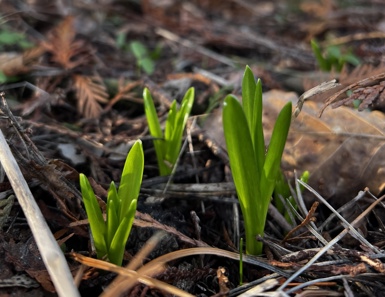
Walking around the woodland today, I noticed thick green shoots pushing their way up through the earth. I was taken aback to realise that these were the early first appearance of bluebells, no doubt emerging now due to the mild temperatures we saw in December. These shoots normally first arrive in February and will continue to grow before flowering in spring.
3rd January
The mildness we enjoyed in December has given way to sub-zero temperatures, with hard frosts marking the first few days of the year. The surface of the wild swimming lakes is partially frozen over and the ground has remained frozen solid all day. Above us, the sky is filled with birds of prey hunting, and the scrapes are hosting so many teal that when startled they fly over the rewilding land in a huge, murmuration-like flock.
I notice all this while walking along the banks of numerous drainage ditches that criss-cross the land. Moving slowly, I scour the opposite bank of each ditch, searching, until after walking the length of several I find what I am looking for: a small hole a little larger than my fist. Below it is a slide of mud over the grass that leads all the way down to the water. Something has been moving up and down between the burrow and the water’s surface. Small, blunt droppings lie just outside the hole’s entrance. I excitedly set up my trail camera on the opposite bank, hopeful for what it might capture.
6th January
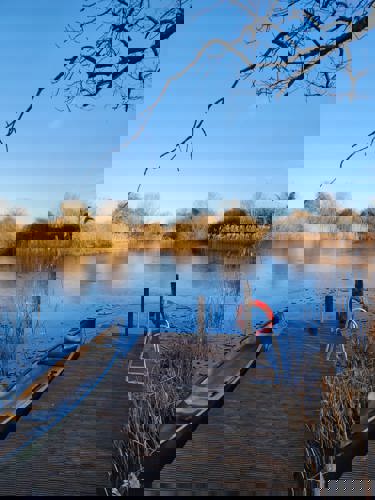
The wild swimming lake is completely frozen over, with two-inch-thick ice dusted with snow. It is a beautiful winter wonderland but one that must be treated with care. I break the ice around the ladder, making space for some daring cold-water plunges. At a water temperature of 0°C the risk of cold-water shock is very real, so it is crucial to keep dips short and controlled. The swimmers have a brilliant time, warming up in the sauna between plunges and enjoying the many physical and mental benefits of immersion in cold water.
9th January
While walking across the land to check on the cows, I heard the brief call of a goldeneye duck. Apart from a small breeding population in Scotland, these diving ducks migrate from northern Europe to overwinter here and are a red list species. This is a new bird for Elmore and the first new species of the year.
13th January
Today we hosted Georgie Warner and a small film crew, who came to talk to us about the rewilding at Elmore Estate. Georgie owns a farm near Bath and has been rewilding her land there since 2018. She is on a mission to spread the word about projects like hers and to capture the difference they make to our countryside’s health. She was fascinating to talk to, and we cannot wait to see the finished film once it is released.
14th January
Unfortunately, after monitoring the location for almost a fortnight, the hole in the drainage ditch yielded no water vole sightings, as I had hoped it might. This is the frustrating reality of trying to capture rare species. You can identify seemingly perfect habitat and, after thorough monitoring, capture nothing, while on other days you can monitor an unlikely location on a hunch and be instantly rewarded with a sighting. I feel sure that there are water voles here at Elmore and will continue to search for them in the spring, when they tend to be more active.
15th January
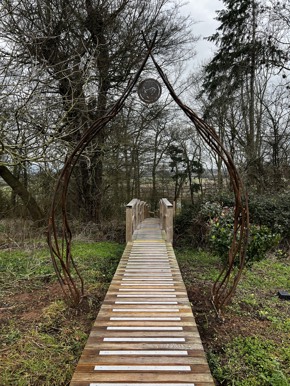
This week we have been freshening up the entrances to our treehouses by placing ornate potholes at the start of each boardwalk. These will act as a magical portal into your luxurious wilderness stay.
17th January
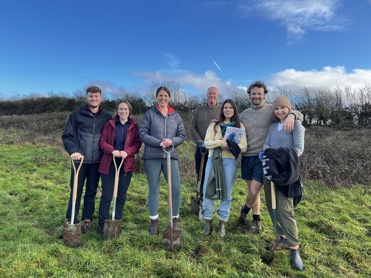
Today marked the first volunteering session of the year on the rewilding land. We have been planting trees amongst bramble thickets. These briers act as nature’s tree guards, protecting young trees from being eaten by rabbits and deer, while also reducing the use of plastics on the land. Over the course of the morning our volunteers planted around 250 trees, creating vital nature corridors that transect the land.
If you would like to join in next month, please sign up here: https://events.earnt.co.uk/shop/elmore-court-vip-status
20th January
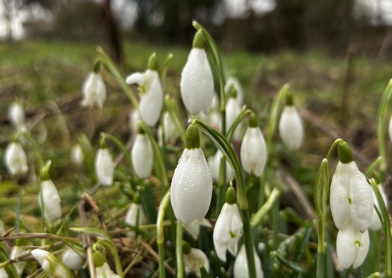
Snowdrops are speckling the verges and hedgerows. Like the shooting bluebells, these too are around a month early this year.
22nd January
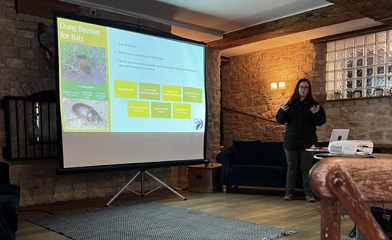
Today, the farm manager John and I attended a local talk on how to encourage bat and invertebrate populations on the land. Bats are often overlooked, yet they are a vital link in the food chain. Highly sensitive to change, they are a great indicator of an ecosystem’s health. Greater and lesser horseshoe bats are both very rare species (listed under the Biodiversity Action Plan 2007) and are found in only a few locations in England. When we last carried out a bat survey, both species were recorded on Elmore Estate, and we plan to continue protecting the habitat they call home.
24th January
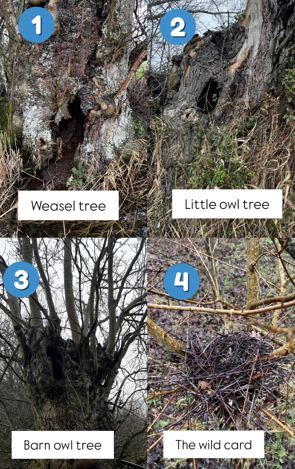
I had a bit of fun asking Instagram followers to help me decide where to next set up a trail camera. Over the weekend, followers voted to place it at a bird’s nest, with a tree where I had previously recorded a weasel over the summer coming in second. I have set up trail cameras at both locations and am looking forward to seeing what is captured.
31st January
The ground is saturated from weeks of rain and the herd of cows have taken to higher ground. Their hoof marks are everywhere across the fields, made more noticeable by the mud. It might look a mess at this time of year, but they are doing their job well by trampling and turning over the soil. Mixed with their dung, this creates wonderfully fertile ground that will support plant growth and a wide variety of invertebrates come spring.
The mud also makes animal tracks more visible. Paths are worn into the land and criss-cross fields, pass through hedges, cross ditches and disappear into the undergrowth. They speak of the ceaseless, ritualised movements of deer, foxes, rabbits, voles, badgers, hares and mice going about their lives, mostly unseen by us. So much goes unseen in winter, but it would be wrong to assume that not much is happening. The pace may be slower, but winter is by no means quiet in the wild.
By Hazel Alabaster, Elmore Estate Ranger


